Meet the scene
Read through without stopping at every unfamiliar detail. Ask what you can picture and what feeling or question stays with you. Read aloud if that helps you hear the sentences.
Start with what the words put in front of you. Build an interpretation you can point to, then leave room for what the poem keeps open.
Use the free template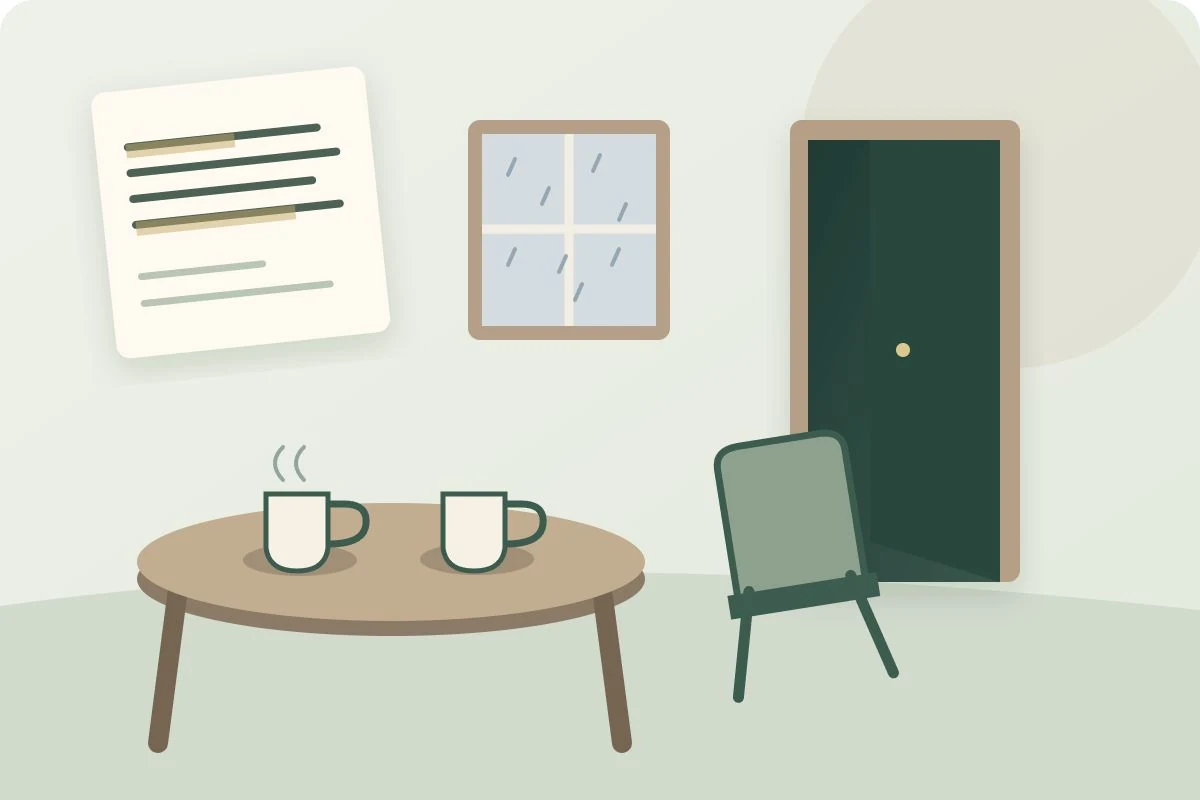
You reach the end of a poem and recognize every word, but cannot say what happened. Start smaller than its overall meaning: who seems to be speaking, what they notice, and what changes between the beginning and the end.
The four-line poem below was written for this guide. All the material you need is here. Its interpretations are examples of reasoning from a text, not facts about a real writer’s life. You can use the exercise and worksheet without an account.
The short answer
Read the poem once for its scene and voice, then again for specific words, sounds and changes. Write one possible reading beside the words that support it. Compare an alternative and mark what the text leaves uncertain. You do not need to identify every device or find one hidden answer before a poem can be worth reading.
The method
Keep your first impression, then see which details support or complicate it. These passes are a starting route, not a rule for every poem.
Read through without stopping at every unfamiliar detail. Ask what you can picture and what feeling or question stays with you. Read aloud if that helps you hear the sentences.
On a second pass, mark one precise word, a repeated sound or image, and a place where the thought changes. Follow sentences across line breaks; a line ending need not end a sentence.
Mark a detail you cannot yet explain. Look up a word or useful context when it changes your reading. Keep the question separate from a claim you can already support.
Write: I read this as ... because ... . Put actual words from the poem after because. Ask what another reader could explain differently and what would make your reading less convincing.
Original poem written for this guide. The line numbers are added for the exercise. Read the four lines in order before looking at the commentary.
1. I set a second cup beside my own.
2. The kettle clicks. The window gathers rain.
3. At half past eight I put the cup away
4. and leave the chair turned toward the door.
On the surface, a speaker puts out a second cup, then removes that cup at a stated time and leaves a chair facing the door. Those are details you can point to. Someone was expected is an inference: a reasonable explanation of the second cup, but not a fact the poem states directly.
The kettle’s click gives the quiet room a small sound. The rain belongs to the scene; calling it a sign of sadness adds an interpretation. Notice the difference between observing a detail and explaining what it does. Neither step needs a long list of technical terms.
The Academy of American Poets suggests noticing a poem’s physical form, reading aloud and asking questions about its speaker. It also distinguishes a poem’s speaker from its author. In this exercise, I is a voice in the poem; it gives us no biography of the person who wrote it.
Reading one: the speaker is disappointed but still hopes someone will arrive. The second cup suggests company was expected. Putting it away marks a change, while the chair still faces the door. That last detail makes the hope reading plausible.
Reading two: the speaker is finishing an ordinary wait and tidying up. The named time and put the cup away support that practical reading. It leaves a question, though: why end the poem with the chair facing the door instead of simply saying the kitchen is tidy?
The first reading explains more of the ending for me, but the poem does not settle who was expected or whether they will come. Compare how much each reading explains without inventing extra events. Different interpretations need reasons; they are not equally supported just because they are possible.
The University of Victoria’s guide treats close reading as questions supported by a poem’s own words, with rereading able to change the interpretation. Our two readings apply that principle to a complete original example.
Line 3 ends at away, which can sound like closure: the waiting is finished. Line 4 begins with and, continuing the same sentence into an action that keeps the doorway important. The break lets you feel a possible ending before you reach the actual ending.
Read the two lines aloud once with a slight pause at the break and once following the sentence straight through. You may hear different emphasis. A line break can affect pace and expectation without requiring a full stop every time.
UW-Madison’s close-reading guide examines how subject, form and word choice work together. Here the form matters because the removal of the cup and the position of the chair pull the ending in different directions.
Try this before reading the check: which claim is supported, and which goes beyond the poem? A: The speaker seems to expect or remember another person. B: The writer’s brother died on a rainy Tuesday. Name a detail for A and identify what is missing for B.
Answer check: the second cup supports A, although expect or remember stays an interpretation. B supplies a relationship, a death and a weekday that the text never gives, then treats the speaker as the writer. A vivid story in your mind is not automatically evidence in the poem.
Now change only the final line to: and push the chair beneath the table. Would your reading shift? One defensible answer is that this ending gives more weight to tidying and closure. Explain the change by comparing the chair’s two positions, rather than guessing a new biography. This is an alternative version for practice, not a correction of the original.
Choose a short poem that interests you. Note its title and source, read it once, then pick two details you cannot yet explain. Look up unfamiliar words that affect the scene. A dictionary meaning is a clue; its fit depends on the sentence and the poem.
Write one reading and one question that remains open. History, language, translation or an allusion may matter, so consult appropriate context when the words alone leave an important gap. Do not force every poem into a tidy story or treat uncertainty as failure.
The worksheet keeps the wording, your interpretation and the unresolved question in separate fields. It is a record of this reading, not a score or a claim to have solved the poem.
If you want a course built around reading poems you enjoy, try Cadence. Describe the poems and the part you want to understand, then answer its setup questions. Cadence builds a course around your goal, with lessons you can read or play as audio, one lesson at a time.
We make Cadence. This article and worksheet are free to use on their own. If you want to try writing after reading, the related writing-poetry page offers a separate suggested goal. It is not a fixed, prewritten poetry course or a promise about literary expertise.
Free worksheet
Use the worked example in this guide or a poem you choose. This plain-text worksheet is free to read and download.
Download worksheet (.txt)POEM READING WORKSHEET Learning Cadence | Original worksheet | 28 October 2026 Poem title and source: First impression: What is happening in the scene? Who seems to be speaking? What is unknown? Exact word or line I noticed (with line number): What its sound, image or position does: My possible reading: Words supporting it: Another possible reading: Detail that challenges my first reading: Context or word to look up: Question I want to keep open: Next poem to read:
Put it into practice
If you want to understand poems you choose, Cadence can build a course around that reading goal. Describe what interests you and answer a few setup questions. We make the app.


Want new features first?
Questions
Start with what you can see, hear and quote from the poem. Learn a term when it helps explain a specific effect. You can notice a change in voice or repeated word before you know its formal name.
It can support more than one reading. Show which words support yours, consider details that challenge it and keep uncertain context marked as uncertain. A possible interpretation still needs evidence.
Look at the punctuation and the sentence as well as the line. Try different amounts of pause and listen for the effect. A line break does not always end the sentence.
No. The voice speaking in a poem may be invented or shaped for the poem. A first-person statement alone does not establish the author’s personal history.

Try Cadence today
Bring a poem-reading goal to Cadence and build a course around what you want to understand. Read or listen, one lesson at a time, on iPhone or Android.
Want new features first?