
The bill keeps climbing
You buy the same things and pay more for them each month.
Eat balanced meals that cost less and actually get eaten.
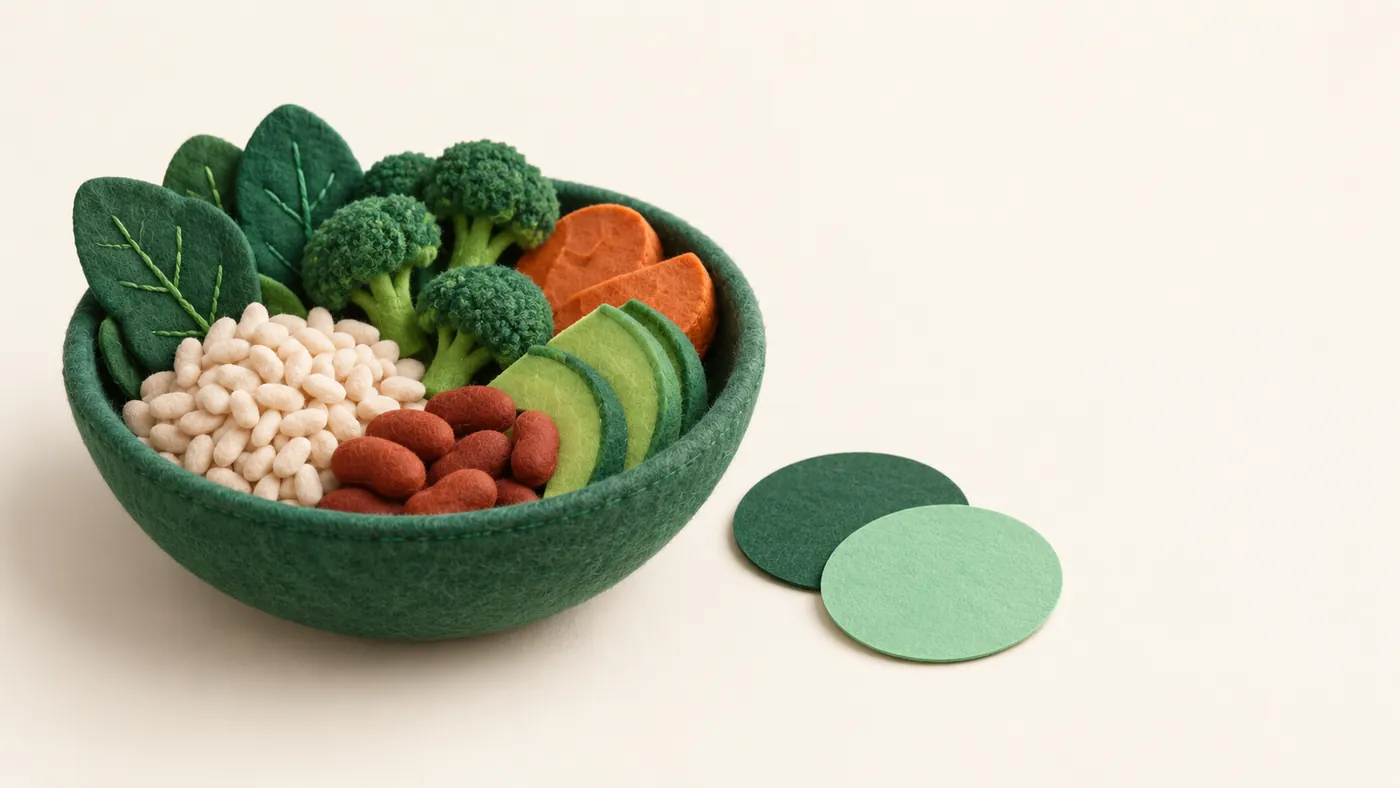
A course on eating well when money is tight. It covers comparing prices by unit, which low-cost foods carry real nutrition, planning so food is used before it spoils, and cooking simple meals from cheap staples. It is general education, not individual dietary advice.

Type this when Cadence asks what you want to learn
I want to eat healthily on a tight budget. My grocery bill keeps rising, I end up buying takeaways when I am tired, and I am not sure which cheap foods are actually good for me.
Change any word so it fits your situation. The course is built from what you type and a few setup questions.
Start today
Useful on their own. The course is for when you want the whole skill, not just the first move.
NIST gives a real shelf example: a 64-ounce bottle of ketchup at $4.49 worked out at 7 cents an ounce, while a 38-ounce bottle at $2.29 was 6 cents an ounce. Read the per-unit figure on the shelf label, or divide the price by the weight yourself.
NHS guidance counts frozen and tinned fruit and vegetables towards 5 A Day. A bag of frozen peas or mixed vegetables keeps for weeks, so less is wasted. For tins, the NHS advises choosing those in natural juice or water, with no added sugar or salt.
Illustrative plan: a bag of dried lentils or a few tins of beans can go into a soup on Monday, a curry on Wednesday and a filling for jacket potatoes on Friday. Decide the three meals before you shop so the whole pack gets used.
Look in the fridge, freezer and cupboard first, then list only what the planned meals still need. If you have a health condition or specific dietary needs, a GP or dietitian can tailor advice; these are general tips.
Sources: NIST: how unit pricing helps you compare value; NHS: frozen, tinned and dried foods that count towards 5 A Day. Practical examples are starting points, not promised results.
Before the course is built
Lesson 1 opens on the moment you describe, and the examples use your role. For this request, expect questions like these.
Right for now
You buy the same things and pay more for them each month.
Good intentions on Sunday, a delivery order by Wednesday.
You assume eating well means expensive fresh food every day.
Course arc
Cadence writes the lessons for you, so the exact path follows your answers. This is the ground a course built from this sentence covers.
01 / 06Reading a receipt to see which purchases cost the most for what they give.
Comparing like for like and spotting when the bigger pack is not cheaper.
Frozen and tinned produce, pulses, grains and proteins that keep well.
A few repeatable meals and a shopping list that follows from them.
Turning a cupboard of basics into meals worth looking forward to.
Keeping food safe and using it before it has to be thrown away.
What changes
Compare cost per kilogram or litre rather than the price of the pack.
Use frozen vegetables, tinned fish, beans, lentils, oats and eggs well.
Plan meals so leftovers and half-used ingredients have somewhere to go.
NHS guidance counts frozen and tinned fruit and vegetables towards 5 A Day, and they often cost less and keep longer.
Unit prices sometimes favour a smaller pack, and food you throw away costs money too.
Course questions
Compare the unit price, not the pack price. NIST gives a real shelf example: a 64-ounce bottle of ketchup at $4.49 worked out at 7 cents an ounce, while a 38-ounce bottle at $2.29 was 6 cents an ounce. Read the per-unit figure on the shelf label, or divide the price by the weight yourself. Swap some fresh produce for frozen or tinned. NHS guidance counts frozen and tinned fruit and vegetables towards 5 A Day. A bag of frozen peas or mixed vegetables keeps for weeks, so less is wasted. For tins, the NHS advises choosing those in natural juice or water, with no added sugar or salt. Build three meals around one cheap protein. Illustrative plan: a bag of dried lentils or a few tins of beans can go into a soup on Monday, a curry on Wednesday and a filling for jacket potatoes on Friday. Decide the three meals before you shop so the whole pack gets used. Write the list from the plan, after checking the cupboard. Look in the fridge, freezer and cupboard first, then list only what the planned meals still need. If you have a health condition or specific dietary needs, a GP or dietitian can tailor advice; these are general tips.
No. Cadence builds the course when you type the sentence and answer a few setup questions, so the lessons follow your situation. This page describes what a course built from this request covers. You see the whole path before Lesson 1.
A course on eating well when money is tight. It covers comparing prices by unit, which low-cost foods carry real nutrition, planning so food is used before it spoils, and cooking simple meals from cheap staples. It is general education, not individual dietary advice. It sits under Cooking in the Life & growth part of the library.
No. Setup asks what you already know and where you want to use it, and the course starts from there. Bring a real situation if you have one; the examples are built around it.
Courses run 7 to 30 lessons of about 10 minutes, sized to what you asked for. One lesson a day is the intended pace, and you can go faster. Lessons can be read or played as audio.
No. Cadence is for practical self-learning and does not award accredited degrees or professional certification.
Start today
The sentence to type
I want to eat healthily on a tight budget. My grocery bill keeps rising, I end up buying takeaways when I am tired, and I am not sure which cheap foods are actually good for me.